Languages
Thursday, October 8, 2026



News and Views from the Global South
Humanitarian Emergencies
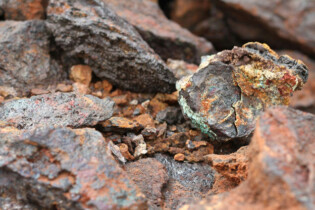
How AI-Powered War Drives the Critical Minerals Race
The demand for critical minerals is accelerating as world powers scramble to stay on top of emerging technologies. Meanwhile, the environment and frontline communities are paying a steep price.
A Rash of Hard-Hitting Questions—Which May Remain Evasive–for Candidates Running for UN Chief
The seven candidates, still in the running for the post of UN Secretary-General (SG), have so far faced a barrage of questions, mostly from delegates and the news media.
Ukrainian Groups Urge WHO to Act on Torture of Captives by Russian Medical Staff
More than 60 Ukrainian organisations have issued an appeal to the World Health Organisation (WHO) to help stop the torture of Ukrainians held in Russian captivity.
Prioritize Multilateralism to Resolve Iran War Deepening Humanitarian Crisis, Says OSF Vice President
Seven months into the Iran War, threats of further military escalation and stalled efforts to reopen the Strait of Hormuz have heightened fears of worsening humanitarian suffering and wider regional instability.
SUDAN: ‘It’s Shocking to Be Forced into Silence Simply Because You Are a Refugee’
CIVICUS discusses life as a refugee with an exiled Sudanese civil society activist who has asked to remain anonymous for security reasons.

The Ingenuity Trap
In the 21st century, getting a pencil into Gaza became international news. In January, after more than two years of restrictions, UNICEF finally brought in learning kits with pencils and exercise books. Textbooks stayed out. By then, the UN had recorded damage to 97.5 per cent of Gaza's schools.
How to Protect Coastal Communities From Tide-Related Loss and Damage in Bangladesh
Villagers rush to the vulnerable spot of the embankment—early warning of the rising tide has alerted them. Together, they save the village from tidal flooding by repairing the vulnerable embankment, which is at risk from the impact of low pressure in July this year. The message is clear: early warnings of the rising tide save lives and property.
The Dollar-Gold Standard’s Lingering Demise
The 1944 Bretton Woods (BW) conference accepted the US demand to use the dollar to settle international financial transactions. This arrangement would require a US balance-of-payments deficit to issue enough dollars.
Forty Years of the ‘Right to Development’: When Growth Excludes, Is It Still Development?
World leaders have warned that the most vulnerable people have been left behind as the right to development has promised more than it has delivered, with development seemingly the preserve of the superrich and powerful.
Floods, Hunger and Disease Pile on Myanmar’s Civil War Misery
Isolated and at constant war with itself, Myanmar’s humanitarian crisis is deepening as global challenges far exceed the capacity to respond of a military regime increasingly focused on its own survival.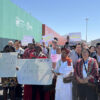
What Isn’t Named Isn’t Protected and being Named Isn’t Enough
Rightsholders came to Ulaanbaatar from across the world, carrying declarations, demands and years of experience defending the lands on which their communities depend. Indigenous Peoples, local communities, Afro-descendant Peoples, women and youth were equally clear about what they needed from COP17. But being in the room is not the same as having power in the room.
Climate Week NYC Kicks off With World Leaders’ Commitments to Action
The Climate Group’s annual conference in New York City has attracted thousands of attendees this year, among them world leaders, corporate heads, philanthropists, and climate advocates. Those leaders present at the opening ceremony of Climate Week have made clear calls to collectively tackle climate issues.
Sudan: Blood on Foreign Powers’ Hands
Sudan’s civil war grinds on. It’s close to three and a half years since the Sudanese Armed Forces (SAF) and the Rapid Support Forces (RSF) militia began their battle for supremacy, and the two forces and their allies continue to slaughter civilians with impunity. As a recent UN report makes clear, the killing is enabled by numerous foreign powers that continue to supply weapons, personnel and logistical support. They have made a civil conflict their proxy war, and their self-interest is sustaining the killing.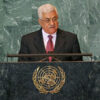
US Visas for Ruthless Autocrats to Address UN – but not for Palestinian Leaders
When Yasser Arafat was denied a US visa for his second visit to New York to address the United Nations back in 1988, the General Assembly defied the United States by temporarily moving the UN’s highest policymaking body to Geneva—perhaps for the first time in UN history—providing a less hostile political environment and a platform for the leader of the Palestine Liberation Organization (PLO).
ETHIOPIA: ‘Reporting on Abuses Shouldn’t Be Treated as a Threat to National Interest’
CIVICUS discusses renewed conflict and a growing crackdown on independent media in Ethiopia with Yonas Kedir, Editor-in-Chief of the independent news outlet Addis Standard, who was recently abducted and detained by government forces.
Bangladesh Must Face Its Quiet Crisis of Internal Displacement
Bangladesh is rightly praised for saving lives during cyclones and floods. Early warning systems, cyclone shelters and community mobilisation have turned once-catastrophic disasters into emergencies in which evacuation is often possible. But behind that success lies a quieter national failure: millions of people are being uprooted inside the country, often more than once, without a clear path back to secure homes, land or livelihoods.
Killing of Environmental Defenders Reflects Power Struggle Over World’s Resources
At least 124 land and environmental defenders were killed around the world in 2025 while protecting forests, rivers, farmland and Indigenous territories, according to a new report by Global Witness that warns violence against activists remains widespread even as recorded killings have declined from previous years.
Renewed Hostilities In Yemen Inflame Displacement and Regional Risks
In recent days, the humanitarian situation in Yemen has deteriorated sharply following a new escalation of hostilities between the Iran-backed Houthi rebels and the Saudi-backed Presidential Leadership Council (PLC). This follows four years of relative stability, marking the most severe resurgence of violence since the collapse of the United Nations (UN)-mediated ceasefire in October 2022.
September 11 and the End of the American Dream
The Day That Changed Everything
On 11 September 2001 I was in New York, on one of my frequent visits to the United Nations, to which I was tied by a consultancy contract. That morning I woke up late, around eleven, sleeping off the jet lag of the flight from Italy. I was staying at the Hyatt Park, today the Millennium. A hotel a few metres from the Glass Palace, built to serve the world of the United Nations.
Will the General Assembly Continue to be Subservient to the P-5 Refusing to Challenge the Nominee for UN Chief?
As the race for the election of a new Secretary-General (UNSG) gathers momentum, the spotlight is on the 193-member General Assembly, the highest policy making body at the United Nations, which has refused to assert itself and continues to play a subservient role in the elections of UNSGs.
At Hammarskjöld’s Grave, Sixty-Five Years After Ndola
Late in August I stood at Dag Hammarskjöld’s grave in Uppsala. It is a quiet place, a long way from New York and from the wars the United Nations exists to prevent.
Next Page »





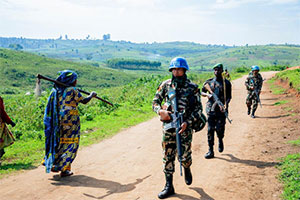 MONUSCO Peacekeepers and FARDC Soldiers Patrol Fataki Area. Credit: UN Photo/Jorkim Jotham Pituwa
Conflict, human rights violations, natural disasters, and famine have been at the forefront of concerns for humanitarian organizations. The escalation of humanitarian crises has led to over 239 million people in need of humanitarian assistance at the start of 2026, as estimated by OCHA’s Global Humanitarian Overview. The 2025 humanitarian appeal received only $12 billion, the lowest funding in over a decade, which has left 24 million fewer people reached in comparison to 2024. Conflict has remained the primary driver of crisis.
Humanitarian emergencies massively impact progress towards the Sustainable Development Goals (SDGs), adversely affecting economic development, inequality, education, planetary well-being, and poverty. Millions of people are faced with reduced access to essential services, including shelter, food, healthcare, and access to clean drinking water. UN Organizations such as UNHCR and the United Nations Children’s Fund (UNICEF) are committed to providing direct relief to affected communities when state governments cannot.
The United Nations 2024 Summit of the Future discussed measures that will be taken to reduce global inequality and promote peacekeeping efforts around the world. The recent UN Climate Change Conference (COP30) in Belém, Brazil, agreed to mobilize $1.3 trillion annually for climate action by 2035, operationalize the loss and damage fund, and triple adaptation finance. However, a fossil fuel transition commitment was not secured, despite climate change and the greenhouse effect being major contributors to humanitarian crises worldwide.
Countries across the world have also rallied to end humanitarian crises, as witnessed in conflicts such as Palestine and Ukraine. IPS is committed to providing relevant and in-depth reports of humanitarian emergencies around the world and their implications.

The Week with IPS

NEXT STOP - SDGs
Tracking global progress towards a sustainable world
Tracking global progress towards a sustainable world